Ever wondered what the future of online gaming holds? Prepare for a deep dive into the electrifying world of “New Multiplayer Experiences”! We’re talking about more than just adding another player; we’re discussing revolutionary gameplay, innovative technologies, and the complete reimagining of how we interact in virtual worlds. Get ready to explore the cutting edge of online gaming, where imagination meets reality, and competition gets a whole new meaning.
From groundbreaking advancements in game engines to the rise of immersive VR and AR technologies, the landscape of multiplayer gaming is constantly evolving. We’ll unpack how these developments are fueling a new generation of experiences, moving beyond the traditional models and pushing the boundaries of what’s possible. We’ll even design a hypothetical game to illustrate these innovative features, comparing and contrasting them with the classics.
Defining “New Multiplayer Experiences”
The landscape of online gaming is constantly evolving, pushing the boundaries of what’s possible in shared virtual worlds. Defining “New Multiplayer Experiences” requires looking beyond simple additions of features to existing games and focusing instead on fundamental shifts in gameplay mechanics, social interaction, and overall player experience. These aren’t just incremental updates; they represent a paradigm shift in how we think about and interact within online multiplayer games.New multiplayer experiences are characterized by innovative approaches to core gameplay loops, introducing novel mechanics that fundamentally alter the player experience.
This might involve a complete reimagining of established genres or the creation of entirely new game types leveraging emerging technologies. The key differentiator isn’t simply the addition of new content, but the introduction of novel interactions and systems that significantly reshape the overall feel and dynamics of the multiplayer environment. A “new” experience offers something fundamentally different, challenging players with unexpected gameplay loops and fostering unique forms of social interaction.
Key Elements Differentiating New Multiplayer Experiences
Several key elements distinguish genuinely new multiplayer experiences from iterative improvements on existing formulas. These include the introduction of emergent gameplay, dynamic world systems that respond to player actions in unpredictable ways, and novel forms of player interaction that move beyond traditional competitive or cooperative structures. Games that successfully achieve this create a sense of discovery and ongoing engagement, fostering a unique and lasting impression on players.
Consider the difference between a traditional MMO with set quests and a game where player actions directly shape the narrative and world state – the latter represents a more innovative approach.
Genres Where Innovative Multiplayer Experiences are Emerging
Innovative multiplayer experiences are flourishing across various gaming genres. The rise of battle royale games, for instance, redefined the competitive landscape with their large-scale, last-man-standing gameplay. Similarly, the emergence of “games as a service” (GaaS) models has facilitated ongoing evolution and the introduction of constantly evolving content, fostering long-term engagement and community building. Games blending social deduction elements with competitive gameplay, such as Among Us, exemplify another innovative approach to multiplayer interaction.
Furthermore, the integration of virtual reality (VR) and augmented reality (AR) technologies is opening up entirely new avenues for creating immersive and engaging multiplayer experiences, blurring the lines between the physical and digital worlds. Imagine a VR game where players collaborate to build and explore a shared virtual world, interacting with each other and the environment in ways never before possible – that’s the essence of a truly new multiplayer experience.
Impact of Online Game Development on Multiplayer Experiences
The rise of online gaming has fundamentally reshaped the landscape of multiplayer experiences, moving beyond simple local network play to create persistent, globally connected worlds. This evolution has been driven by significant technological advancements, leading to richer, more immersive, and socially interactive gaming experiences than ever before. The impact is visible across various aspects, from game design and mechanics to the social fabric of gaming communities.Technological Advancements Shaping Multiplayer ExperiencesTechnological advancements have been the engine driving innovation in online multiplayer games.
High-speed internet connections, coupled with powerful cloud computing infrastructure, have enabled the creation of massive multiplayer online games (MMOs) with thousands of concurrent players inhabiting the same virtual space. Advances in game engines have facilitated the development of realistic graphics, complex physics simulations, and sophisticated AI, leading to more immersive and engaging gameplay. Furthermore, the development of robust networking protocols and security measures has enabled smoother, more reliable online play, minimizing lag and preventing cheating.
The integration of voice and video chat has fostered stronger social connections among players, transforming the multiplayer experience into a more collaborative and social activity.
Innovative Multiplayer Features in a Hypothetical Online Game
Imagine “Echoes of Aethelgard,” a persistent-world MMO set in a dynamically changing fantasy realm. Players can choose from a diverse range of classes, each with unique skills and playstyles. The game utilizes procedural generation to create a vast and ever-evolving landscape, ensuring high replayability. One innovative feature is the “Shared Narrative System,” where player actions directly impact the game’s story.
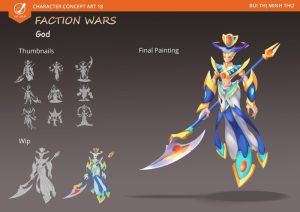
For example, a successful player-led rebellion against a tyrannical king could fundamentally alter the game’s political landscape and unlock new quest lines. Another key feature is “Dynamic Faction Warfare,” where player-controlled factions compete for control of territories, resources, and influence. The outcome of these conflicts is not predetermined but depends entirely on player actions and strategic alliances. The game also features a sophisticated AI system that adapts to player behavior, creating unpredictable challenges and opportunities.
Finally, a built-in creative toolset allows players to design and share their own quests, challenges, and even custom items, further enriching the gameplay experience and fostering community collaboration.
Traditional vs. Modern Multiplayer Game Development
Traditional multiplayer game development often focused on local area network (LAN) play, with a limited number of players and simpler game mechanics. Development cycles were typically longer, and updates were infrequent. Modern approaches, however, leverage the power of cloud computing, allowing for massive scalability and continuous updates. Game developers now utilize agile methodologies and iterative development processes, releasing regular patches and content updates to keep the game fresh and engaging.
Furthermore, modern multiplayer games increasingly incorporate user-generated content, social features, and data-driven design, fostering a greater sense of community and personalization. The shift from static, pre-defined game worlds to dynamic, player-driven narratives is a hallmark of modern multiplayer game development, exemplified by games like EVE Online and World of Warcraft, where player actions have profound and lasting consequences on the game’s world.
Closing Summary

So, there you have it – a glimpse into the thrilling future of multiplayer gaming! We’ve journeyed through the evolution of online interactions, witnessing the impact of technological advancements and the birth of truly innovative experiences. The future is undeniably exciting, promising deeper immersion, richer interactions, and even more unforgettable moments shared with fellow players across the globe. Are you ready to jump in?
Quick FAQs
What are some examples of “new” multiplayer experiences?
Think massively multiplayer online games (MMOs) with dynamic, player-driven narratives, games incorporating augmented reality elements for real-world interaction, or competitive games using innovative esports features like spectator modes and integrated streaming.
How are these new experiences impacting the gaming industry?
They’re driving innovation in game design, pushing technological boundaries, and creating new revenue streams through features like in-game purchases and esports tournaments. They’re also shaping social interaction and community building within the gaming world.
What challenges do developers face when creating new multiplayer experiences?
Balancing game mechanics for a diverse player base, ensuring server stability and scalability for large player counts, and preventing cheating and exploiting are all significant hurdles.